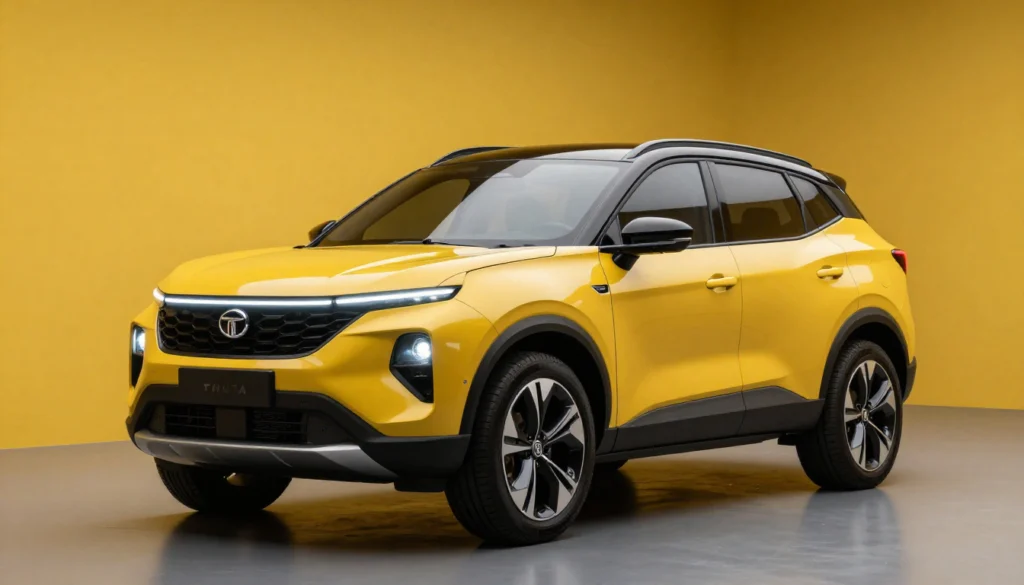
The New Tata Serra 2026: In the vast and ever evolving landscape of the Indian automobile industry, where is models come with the planned obsolescence and fade into memory, one name persists with the stubborn vitality of legend. It wasn’t the most powerful nor the most refined and its production run was relatively brief. Yet, decades after it rolled off the line for the last time, the Tata Sierra continues to command a cult-like upgrade. It was more than just India’s first sports utility vehicle (SUV); it was a bold statement, a design rebellion and promise of automotive freedom that its left an indelible mark on a generation. This is the story of the unfinished symphony that is the Tata Sierra.
A Radical Departure: Born from the Telco Mindset
To understand the Sierra’s impact, we must rewind to the late 1980s. The Indian car market was a sea of boxy Ambassadors and Premier Padminis. Maruti had injected modernity with the 800, but the concept of a personal, lifestyle vehicle was non-existent. Trucks and commercial vehicles were the domain of Tata Engineering and Locomotive Company (Telco). It was from this utilitarian, rugged mindset that the Sierra was born.
Launched in a 1991, the tata Sierra wasn’t just a new model; it was the concept car for the roads. Based on the robust Tata Mobile platform an it inherited a rugged body on frame chassis and a dependable 2.0-liter diesel engine. But what Tata did with this utilitarian base was nothing short of a revolutionary.
The Design That Stopped Traffic: A Three-Door Enigma
The Sierra’s design was it’s the single biggest act of audacity. In an era of symmetrical sedans here was a vehicle that its looked like it had driven out of a futuristic comic book.
- The Asymmetrical Wonder: The most iconic feature was, without a doubt, the single rear door on the left-hand side. This wasn’t a quirk of engineering limitation but a deliberate, bold choice. It gave the Sierra a unique, coupé-like profile while maintaining practicality.
- The Panoramic Greenhouse: The steeply raked A-pillars flowed into a vast, single piece curved glass on the rear quarters. This “greenhouse” design with its slender pillars, offered visibility that modern SUVs as choked with the safety beams, can only dream of. It created an airy, panoramic cabin that connected occupants with the outside world.
- Muscular Stance: With its flared wheel arches an its high ground clearance and upright stance, it looked purposeful and tough. It was unmistakably an off roader, yet it wore for capability with a stylish flair unknown to the Jeep or the Mahindra Classic of time.
This design wasn’t just visually striking; it was emotionally resonant and It said, “I am different. I am adventurous. I play by my own rules.”
Behind the Wheel: The Experience of Driving a Legend
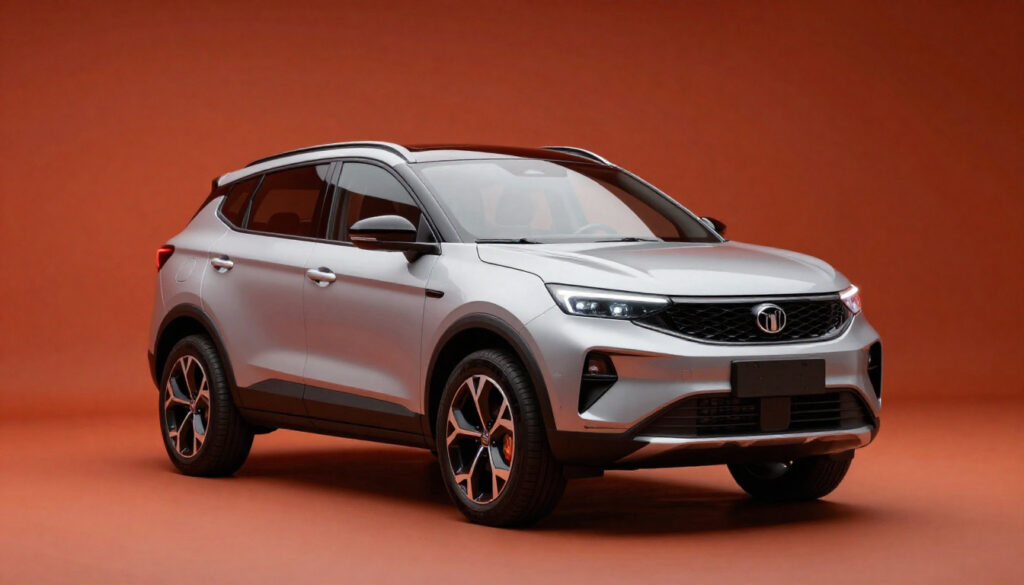
Driving a Sierra was an event, a raw and engaging dialogue between man and machine. The 2.0-liter NA diesel (and later, a more powerful turbo version) wasn’t about blistering pace. It was about the characteristic thrum-thrum-thrum diesel soundtrack, the deep torque that pulled willingly from low revs, and the feeling of invincibility that the rugged build provided.
The steering was heavy, communicative, and direct. The ride, while firm due to the leaf-spring rear suspension (a hallmark of its commercial vehicle lineage), was commanding. You sat high, you saw everything, and you felt like you could go anywhere. The Sierra democratised the sense of adventure. It wasn’t a luxury import; it was a homegrown machine that promised—and delivered—on the capability to leave the tarmac behind.
On the inside, the story was a mix of brilliance and compromise. The space was incredible, especially with the rear bench that could be configured in multiple ways. But none of that mattered. You were inside a moving piece of art, a cabin flooded with light, and that was experience enough.
The Cultural Impact and Why It Faded
The Sierra quickly became a symbol for a new, aspirational India. It was the car of the young entrepreneur, the adventurous doctor, the unconventional artist. It featured in early-90s music videos and felt inherently “cool” in a way no Indian car had before. It spawned a passionate owners’ community that exists to this day, with enthusiasts restoring and cherishing their “Greenhouse” vehicles.
So, why did this icon fade away? Production ended in the year 2000, and the reasons were a combination of market reality and corporate strategy.
- The Three-Door Conundrum: In a country where the car is often the sole family vehicle, the three-door layout, especially with the unconventional single rear door, became a practical hurdle for many buyers.
- The Arrival of the Safari: In 1998, Tata launched the Safari. It offered the same rugged DNA and adventurous spirit but in a more practical, family-friendly five-door package, with a more powerful engine and a premium interior. The Safari was the sensible evolution of the Sierra idea, and it captured the growing SUV market perfectly.
- Cost and Competition: The Sierra was relatively expensive to build and maintain. As the market opened up in the late 90s, more refined Japanese options began to appear, appealing to a different sensibility.
The Legacy: More Than Just Metal and Memory
The Sierra’s true legacy isn’t measured in sales numbers but in the path it blazed.
- The Founder of a Dynasty: It is the spiritual and mechanical ancestor of the Tata Safari, one of India’s most beloved SUVs. The DNA of the Sierra—the ruggedness, the commanding driving position, the go-anywhere promise—flows directly into every 4×4 Tata has made since.
- A Design Benchmark: It proved that an Indian car company could be bold, innovative, and globally relevant in design. It challenged the notion of what an Indian car should look like.
- The Cult of Character: In today’s world of the homogenised, computer designed crossovers the tata Sierra stands as a testament to character. It was just flawed it was idiosyncratic but it had a soul. It greate feeling in a way that a perfect, sanitised is never could.
- The Resurrection of a Dream: The thunderous response to the tata Sierra EV concept showcased at the 2020 Auto Expo is a proof of its enduring power. The mere silhouette of the three door an greenhouse design sent the automotive community into a frenzy. It showed that the tata Sierra isn’t a forgotten, it’s a sleeping giant of the nostalgia and desire, waiting for Tata to reinterpret it for the electric age.
Conclusion: The Unfinished Symphony
The Tata Sierra ahead of its time. It was a vehicle of pure concept in a market looking for pure convenience. It sang a song of adventure, individuality, and rugged charm, but the audience in the 90s wasn’t fully ready for its melody.
Today as we see the global auto world celebrating retro designs and emotional connectivity of the Sierra’s song rings truer than ever. It remains the in collective memory of Indian car enthusiasts, an unforgettable icon. a beautiful, bold and slightly rough around the edges masterpiece. It was a symphony that Tata was started playing in 1991 and though the curtains came down in 2000, the music has never really stopped. We are all still listening, hoping for an encore.